Goregaon(E) - 400065.
Andheri(W) - 400058
gnassociates530@gmail.com
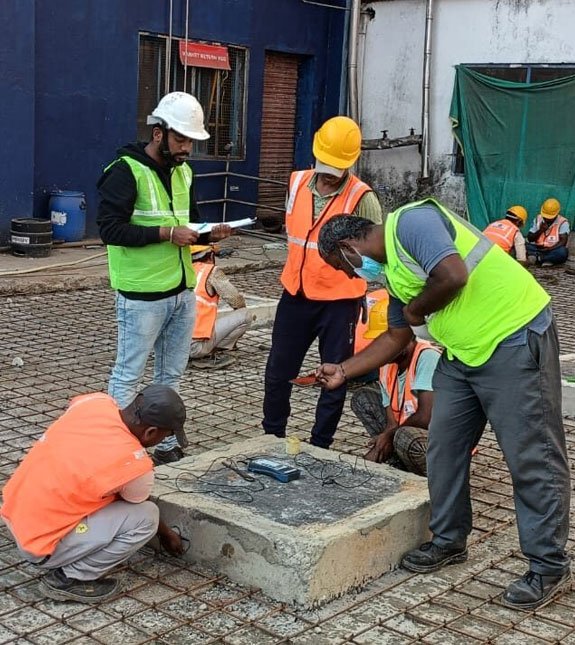
Every building, whether it’s residential, commercial, industrial, or heritage, is designed with a defined service life. However, due to factors such as poor construction quality, corrosion of steel, water leakages, exposure to harsh weather, and inadequate maintenance, many structures begin to deteriorate much earlier than the expected timeline and in some cases, this can even lead to partial failures or collapses before the end of their intended lifespan.
Therefore, to safeguard occupants and preserve the building’s value, it is quite essential to monitor the health of a structure at regular intervals. A Structural Audit is a systematic technical examination that is carried out by licensed structural engineers to assess the condition, safety, and serviceability of a building. It does not only identifies visible defects but also detects hidden weaknesses through advanced testing methods.
Structural audits are often the first as well as the most important step before repairs, restoration, or redevelopment. They provide a clear look of the building’s present health, help in planning the scope of necessary interventions, and make sure compliance with all legal requirements that is laid down by authorities such as the BMC.


During a structural audit, our engineers carry out a detailed evaluation that includes the following:
Through external plaster, terraces and parapet walls
From overhead and underground water tanks
From bathrooms, kitchens, and plumbing lines/joints
As part of the Structural Audit, we conduct a series of tests to assess the building’s strength. These evaluations enable us to prepare a detailed report along with the estimated cost of repairs, which serves as the basis for carrying out the necessary work to enhance the building’s safety, durability, and functionality.”
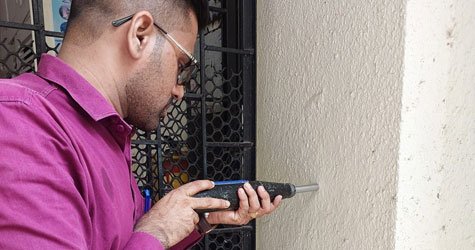
A simple and quick method to check the surface hardness of concrete. It provides an estimate of the compressive strength and helps identify weak or deteriorated concrete areas, making it a widely used preliminary assessment tool.
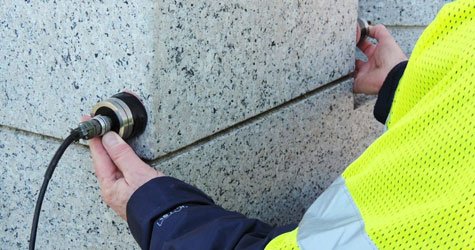
This test measures the speed of ultrasonic waves passing through concrete. It helps determine the homogeneity, presence of internal cracks, voids, or honeycombing, and provides insights into the overall quality of the structure.
Carbonation reduces the alkalinity of concrete and makes reinforcement prone to corrosion. This test determines the depth of carbonation and helps assess the durability and remaining life of the concrete structure.
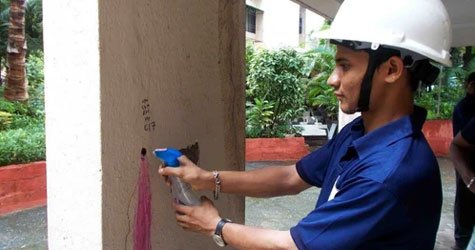
Used to assess the probability of reinforcement corrosion in RCC structures. By measuring the electrical potential of embedded steel, it helps engineers evaluate areas most at risk and plan effective repair strategies.
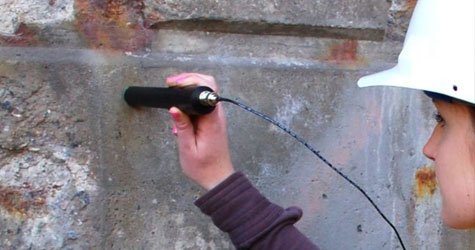
A non-invasive test to measure the concrete cover depth and locate reinforcement bars. Adequate cover is vital for durability, fire resistance, and protection against corrosion, making this test an important quality check.
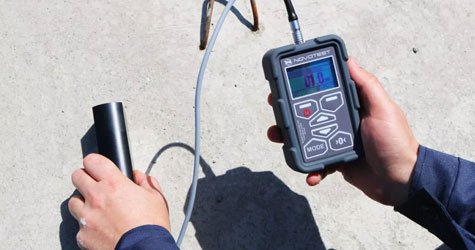
Concrete samples are analyzed to detect harmful chemicals such as chlorides, sulfates, and alkalis. These chemicals accelerate steel corrosion and structural deterioration, and the test provides insights for selecting proper repair methods.
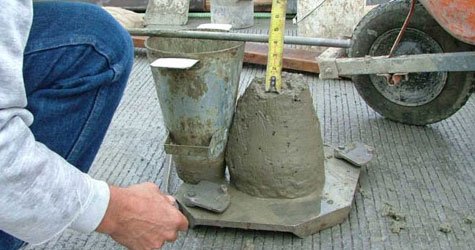
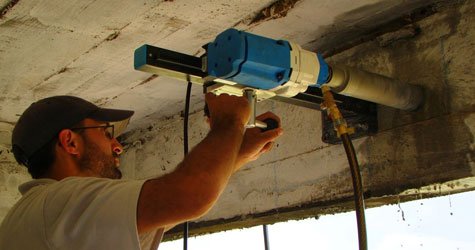
Considered a confirmatory test, it involves extracting a cylindrical core sample from concrete to directly determine compressive strength and internal quality. Core testing provides highly reliable data for audits and rehabilitation planning.
A structural audit should be done for older buildings, buildings with cracks or leakages, or before major repairs or redevelopment. Regular audits help keep the structure safe and well-maintained.
NDT uses special testing methods to check the condition of concrete and steel without damaging the building. These tests help identify hidden defects and measure the structure's strength.
The time depends on the size and condition of the building. Most audits are completed within a few days, followed by a detailed report with findings and repair recommendations.
We use advanced Non-Destructive Tests (NDT) such as the Rebound Hammer Test, UPV Test, Carbonation Test, Half-Cell Potential Test, Cover Meter Test, Chemical Analysis, and Core Test to accurately assess your building's condition.
We start with a detailed visual inspection of your building, followed by Non-Destructive Testing (NDT) where required. After the assessment, we provide a comprehensive report with our findings, repair recommendations, and estimated repair costs.