Buildings are designed to last for many years, but that does not mean they can be left without maintenance or repairs.
Over time, buildings are exposed to rain, moisture, temperature changes, pollution, repeated loading, and normal wear and tear. Structural elements can also be affected by corrosion, cracks, water leakage, poor maintenance, changes in use, or previous construction issues.
When these problems are identified, structural repair and rehabilitation can help restore the condition and performance of the building.
Repair and rehabilitation of structures are not simply about making a building look better. The purpose is to address the underlying problems, improve the condition of structural elements, and help the building continue to perform as required.
With proper assessment, timely repairs, and suitable rehabilitation methods, the useful life of an existing building can often be extended.
What Is Structural Repair?
Structural repair refers to work carried out to address damage, deterioration, or defects in structural elements.
These elements can include:
- Columns
- Beams
- Slabs
- Structural walls
- Foundations
- Staircases
- Roof structures
- Other load-bearing components
The repair method depends on the type as well as cause of the problem.
What Is Structural Rehabilitation?
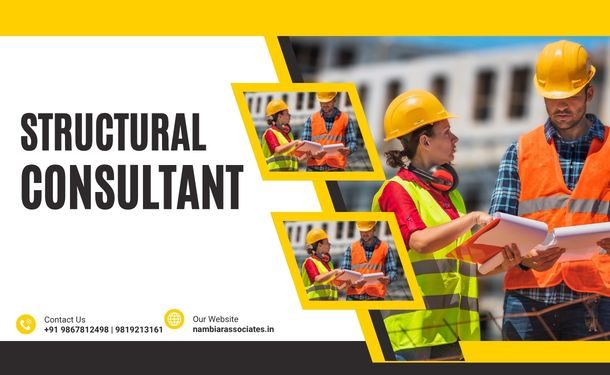
Structural rehabilitation is a broader process of restoring or improving an existing structure so that it can continue to perform its intended function with guidance from a structural consultant
Rehabilitation can include repair, strengthening, replacement of damaged components, protection against further deterioration, and other improvement measures.
The work may be required when a building has aged, experienced deterioration, undergone changes in use, or developed structural problems.
In some cases, rehabilitation is also carried out when an existing building needs to meet new functional or structural requirements.
The main objective of Repair and Rehabilitation of Structures is to improve the condition and the performance of the existing structure rather than automatically replacing the entire building.
Why Do Buildings Need Repair and Rehabilitation?
A building's structural condition can change over time. One of the most common causes is exposure to moisture.
Water entering concrete can contribute to corrosion of reinforcement. As reinforcement corrodes, it can expand and create pressure inside the concrete. This may then lead to cracking, spalling, and loss of the protective concrete around the reinforcement, making Repair and Rehabilitation of Structures necessary.
Other problems can result from:
- Ageing of materials
- Poor drainage
- Water leakage
- Reinforcement corrosion
- Cracks
- Overloading
- Construction defects
- Environmental exposure
- Poor maintenance
- Changes in building use
- Unplanned alterations
- Earthquakes or other major events
How Repair Helps Extend the Life of a Building
Repair work can help protect structural elements from further deterioration.
For example, if damaged concrete is removed and properly repaired, the reinforcement can be protected and the surrounding concrete can be restored as well.
Similarly, addressing water leakage can help reduce continued moisture exposure.
The exact benefit depends on the cause of the deterioration and also the quality of the repair.
A repair that only covers the visible defect without addressing the underlying cause may not provide a long-term solution.
This is why proper diagnosis is a very important part of structural repair.
Common Structural Problems in Existing Buildings
Different buildings experience different types of deterioration. Some common problems include:
Cracks in Concrete
There can be many causes. Some of them may occur because of shrinkage, temperature fluctuations, settlement, movement, pressure, corrosion, etc. However, not all cracks indicate serious structural problems. Proper evaluation of cracks in crucial structural elements is necessary.
The location, width, pattern, and development of a crack all can provide useful information about its possible cause.
Concrete Spalling
Spalling occurs when pieces of concrete break away from the surface and it can expose reinforcement and may be associated with corrosion, moisture, inadequate cover, or other deterioration.
The damaged concrete usually needs to be assessed and the underlying cause addressed before the repair is completed.
Reinforcement Corrosion
Corrosion of reinforcement is a common concern in reinforced concrete buildings.
Moisture, carbonation, and other environmental conditions can contribute to corrosion.
As reinforcement corrodes, it can expand and cause cracking and spalling of the surrounding concrete.
Repair and Rehabilitation of Structures may involve removing deteriorated concrete, treating or replacing affected reinforcement where required, restoring the concrete, and addressing the conditions that caused the corrosion.
Water Leakage and Dampness
Persistent water leakage can contribute to deterioration.
Water may enter through roofs, balconies, bathrooms, terraces, joints, cracks, or damaged waterproofing systems.
The solution may involve waterproofing, drainage improvements, crack treatment, or other repairs depending on the source of the water.
Just covering the affected area without properly fixing the source may not solve the problem.
Settlement and Movement
Buildings can experience movement due to changes in soil conditions, foundation issues, nearby construction, water-related changes, or other factors.
Signs may include cracks, uneven floors, sticking doors, or changes in alignment.
The cause needs to be investigated before structural repair is planned.
Structural Assessment Before Repair
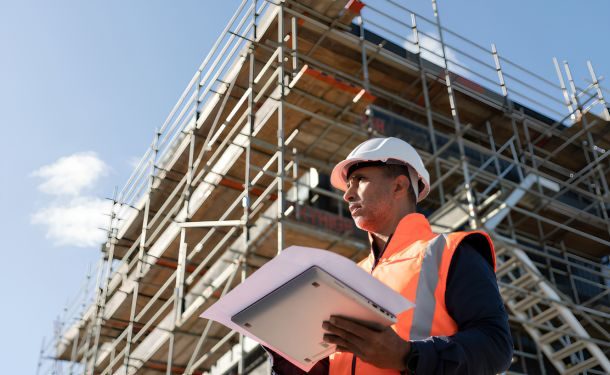
Repair work should ideally begin with an assessment of the existing structure.
The assessment can include a visual inspection of the building and its structural elements.
Depending on the problem, additional investigation may also be required.
This can include:
- Review of structural drawings
- Site measurements
- Concrete testing
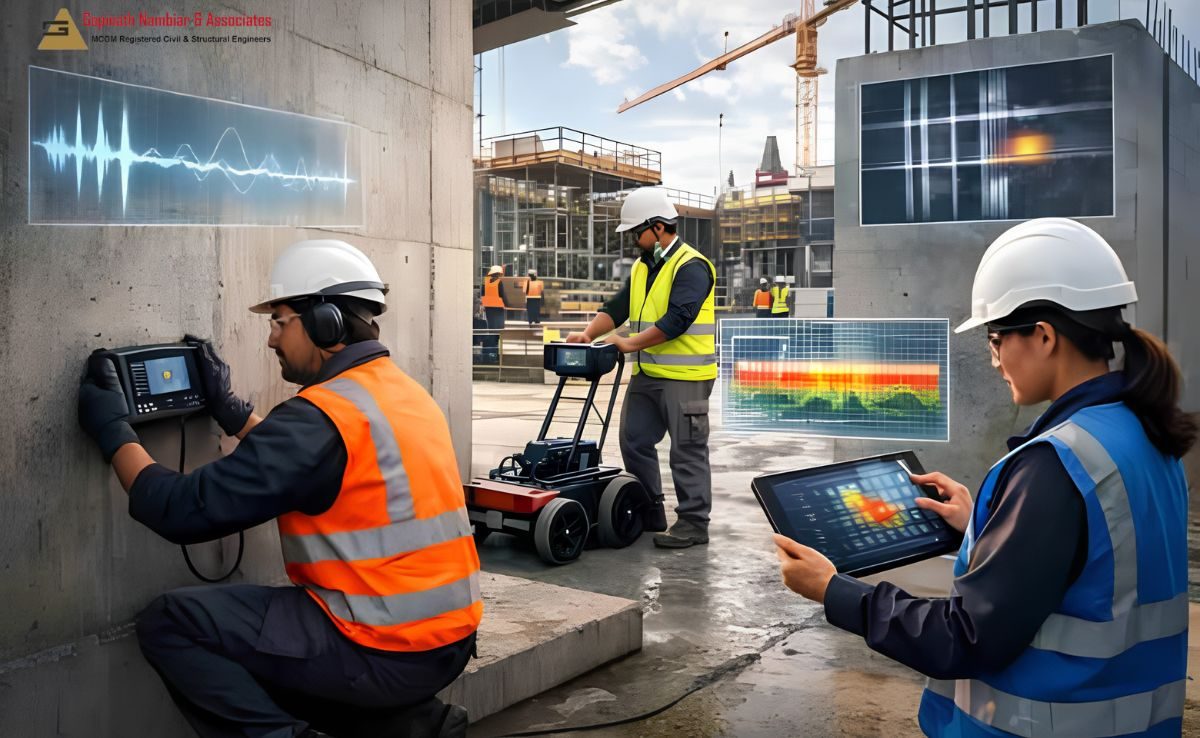
- Reinforcement scanning
- Non-destructive testing
- Investigation of cracks
- Corrosion assessment
- Material testing
- Structural analysis
The information collected helps the engineer understand the current condition and decide what type of Repair and Rehabilitation of Structures may be appropriate.
Role of NDT in Structural Rehabilitation
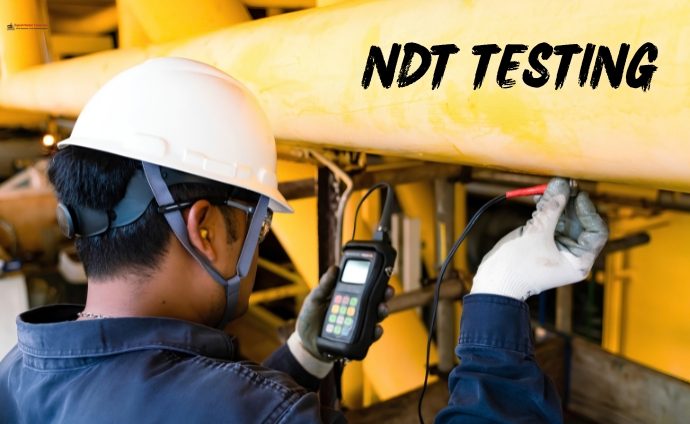
Non-Destructive Testing, or NDT, can be useful during structural assessment.
NDT methods can provide information about existing concrete and other structural materials without causing significant damage.
Depending on the situation, methods such as rebound hammer testing, ultrasonic pulse velocity, reinforcement scanning, carbonation testing, and other techniques may be considered.
NDT results can be combined with visual inspection and other information to understand the condition of the structure.
The specific tests required depend on what the engineer needs to investigate.
Common Structural Repair Methods
The repair method depends on the type of damage.
Some common approaches include:
Concrete Repair
Damaged or deteriorated concrete may be removed and replaced with an appropriate repair material.
Before repair, the affected area needs to be properly prepared.
Where reinforcement is exposed or affected by corrosion, the reinforcement may also need to be cleaned, treated, or otherwise addressed depending on its condition.
Crack Repair
Different types of cracks require different treatment.
Some cracks may be treated using suitable repair materials, while structural cracks may require more detailed intervention.
For certain cracks, epoxy-based materials or other suitable systems may be used. For moving or non-structural cracks, a different approach may be appropriate.
The repair material should therefore be selected based on the nature and cause of the crack.
Jacketing
Jacketing can be used to increase the capacity or improve the condition of certain structural elements.
For example, reinforced concrete jacketing may be considered for a column or beam where additional capacity or protection is required.
The existing element is prepared, and additional structural material and reinforcement are introduced according to the design.
Strengthening With Steel
Steel plates, sections, or other steel components can sometimes be used to strengthen structural elements.
The appropriate arrangement depends on the structural requirement and the existing condition.
Connections between the strengthening system and the existing structure are also important.
Fiber-Reinforced Strengthening
Certain fiber-reinforced systems can be used to strengthen structural elements.
These materials can provide additional capacity without adding as much weight as some traditional strengthening methods.
The suitability of such systems depends on the structural element, loading, existing condition, environmental exposure, and other project requirements.
Repair and Strengthening Are Not the Same
Repair and strengthening are related but different.
Repair generally aims to restore an element that has deteriorated or been damaged.
Strengthening aims to increase the capacity or improve the structural performance of an existing element.
For example, repairing damaged concrete can restore the condition of a beam.
If the beam also needs to carry higher loads, additional strengthening may be required.
A building may need repair, strengthening, or both.
When Is Structural Rehabilitation Required?
Structural rehabilitation may be considered when:
- A building has significant deterioration.
- Structural cracks have developed.
- Reinforcement is corroded.
- Concrete is spalling.
- The building has experienced prolonged water exposure.
- The building is being modified.
- Additional floors are being planned.
- Building use is changing.
- Structural capacity needs to be increased.
- The building has been affected by an earthquake, fire, or other major event.
- Previous repairs have not solved the underlying problem.
- An assessment identifies the need for strengthening.
The appropriate Repair and Rehabilitation of Structures solution depends on the condition and requirements of the particular building.
Rehabilitation Before Adding Another Floor
Adding another floor changes the loads acting on an existing building.
Before such work is carried out, the existing structural system should be assessed.
The assessment may consider foundations, columns, beams, slabs, structural walls, and other elements. If the existing structure does not have sufficient capacity for the proposed addition, strengthening may be required.
Possible strengthening measures depend on the building and may involve structural elements at different levels.
This is why an additional floor should not be planned based only on the apparent condition of the existing building.
Rehabilitation After an Earthquake
Earthquakes can cause different types of structural damage.
Some damage may be visible, while other problems may require detailed investigation.
After a significant earthquake, a structural engineer may need to assess the building before repairs are planned.
Depending on the findings, the work may involve repairing damaged elements, strengthening structural components, improving connections, or carrying out other rehabilitation measures.
The objective is not simply to repair visible cracks. The overall structural performance needs to be considered.
How Regular Maintenance Supports Structural Life
Repair and Rehabilitation of Structures work should be supported by regular maintenance.
Maintenance can help identify problems before they become more serious.
For example, repairing leaking pipes, maintaining waterproofing, keeping drainage systems clear, and addressing cracks early can help reduce conditions that contribute to deterioration.
A building that is regularly inspected and maintained is easier to manage than one where problems are allowed to continue for many years.
Structural rehabilitation should therefore be seen as part of the building's overall maintenance strategy.
Benefits of Structural Repair and Rehabilitation
Proper Repair and Rehabilitation of Structures can provide several benefits.
Extends the Useful Life of the Building
Addressing deterioration can help an existing building continue to serve its intended purpose for longer.
Addresses Structural Problems
Repair work can address damaged or deteriorated structural elements and help restore their condition.
Can Avoid Unnecessary Demolition
In some cases, a building can be repaired or strengthened rather than completely replaced.
The feasibility depends on the condition and structural requirements of the building.
Improves Structural Performance
Strengthening can improve the capacity or performance of structural elements where required.
Helps Protect Against Further Deterioration
Repairing damage and addressing its underlying cause can help reduce the possibility of continued deterioration.
Supports Better Maintenance Planning
A structural assessment can help owners understand which repairs need immediate attention and which can be addressed as part of planned maintenance.
Why Professional Structural Engineers Are Important
Structural repair is not simply a construction activity.
The correct repair method depends on the cause of the problem, the existing structure, the materials involved, and the required performance.
Using the wrong repair method can sometimes hide the visible problem without solving the underlying issue.
A structural engineer can assess the existing condition, determine the likely cause of damage, evaluate structural requirements, and develop an appropriate repair or strengthening approach.
The repair work should then be carried out according to the engineering requirements and properly monitored.
How Nambiar Associates Approaches Structural Repair and Rehabilitation
At Nambiar Associates, we begin by understanding the existing structure and the problems affecting it. We review the available information, inspect the building, identify areas of concern, and consider additional testing where required.
The findings are then used to determine whether the building requires repair, strengthening, rehabilitation, monitoring, or further investigation.
Our approach focuses on addressing the underlying problem rather than simply treating visible damage. The Repair and Rehabilitation of Structures solution is developed around the actual condition of the building, its structural requirements, and its intended future use.
When Should You Consider Structural Repair or Rehabilitation?
You may need to consider structural repair or rehabilitation when:
- Your building has developed structural cracks.
- Concrete is damaged or falling away.
- Reinforcement is visible or corroded.
- There is persistent water leakage.
- The building is showing signs of deterioration.
- You are planning an additional floor.
- Major alterations are proposed.
- The use of the building is changing.
- A structural audit has identified problems.
- The building has experienced an earthquake or other major event.
- Existing repairs are failing or damage has returned.
Early assessment can make it easier to understand the problem and plan the appropriate solution.
FAQs
Q1. What is structural rehabilitation?
Structural rehabilitation is the broader process of restoring or improving an existing building so that it can continue to perform its intended function.
Q2. Can structural repair extend the life of a building?
Yes. Properly planned repairs can address deterioration, protect structural elements, and help an existing building remain usable for longer.
Q3. Is every crack a structural problem?
No. Some cracks are non-structural. However, cracks in structural elements or cracks that are growing or recurring should be assessed by a structural professional.
Q4. What is the difference between repair and strengthening?
Repair generally restores damaged or deteriorated elements, while strengthening is intended to increase structural capacity or improve structural performance.
Q5. Is NDT used during structural rehabilitation?
It can be. NDT can provide useful information about existing materials and structural elements and may form part of the assessment before repair or strengthening.